The Row (1961)
every house has secrets
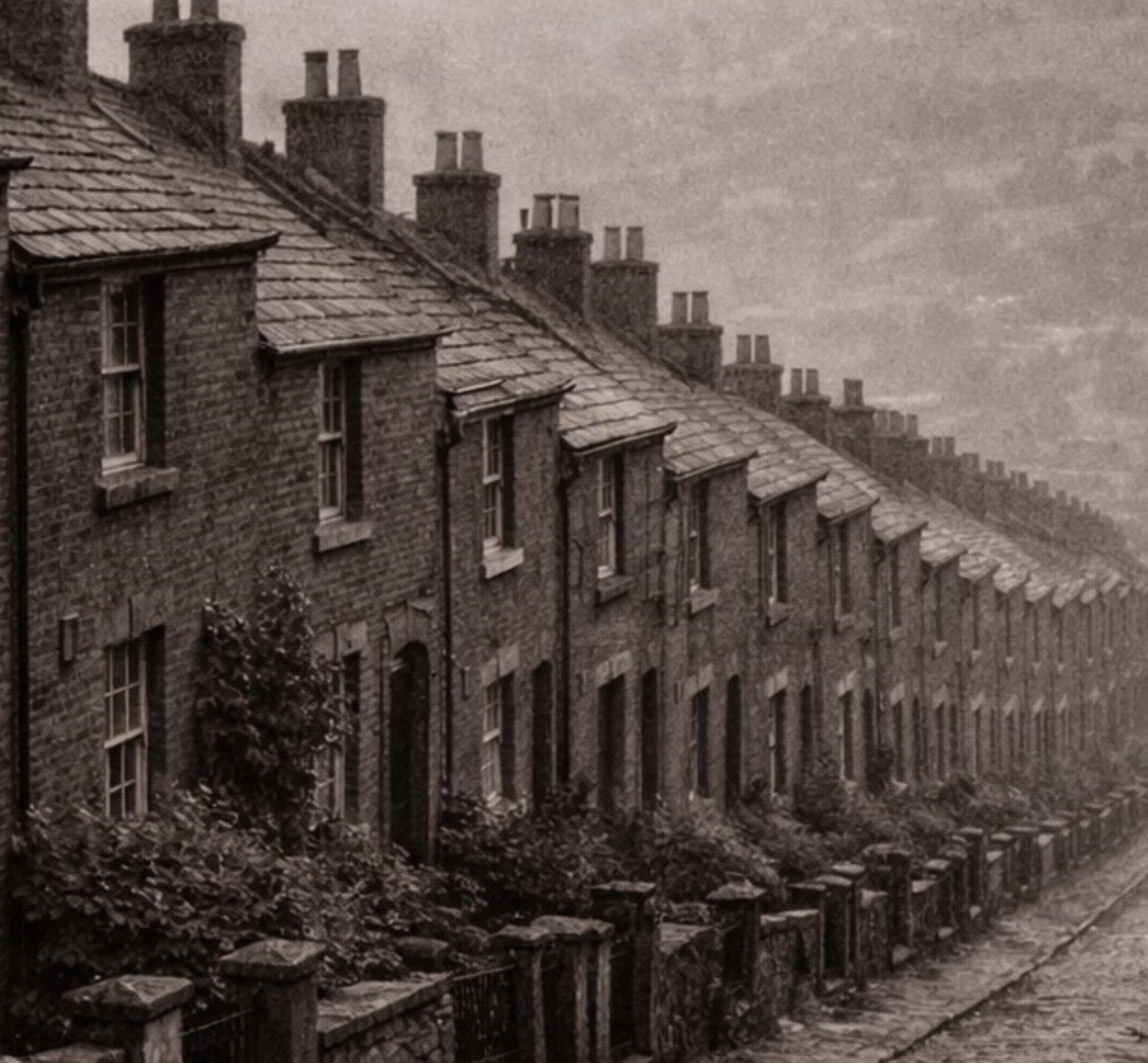
Released in spring 1961, The Row is often regarded as Crimea Street Films’ most architecturally preoccupied production and among the clearest examples of the studio’s fascination with repetition, enclosure and quiet social tension.Directed by Alfred Sherwin, the film examined the lives unfolding across a single descending terrace street over the course of several damp winter weeks. Rather than centring on one protagonist, the narrative drifted gradually between households, revealing fragments of marriages, private disappointments, unpaid debts and long-held resentments which rarely surfaced openly but seemed permanently embedded within the street itself.
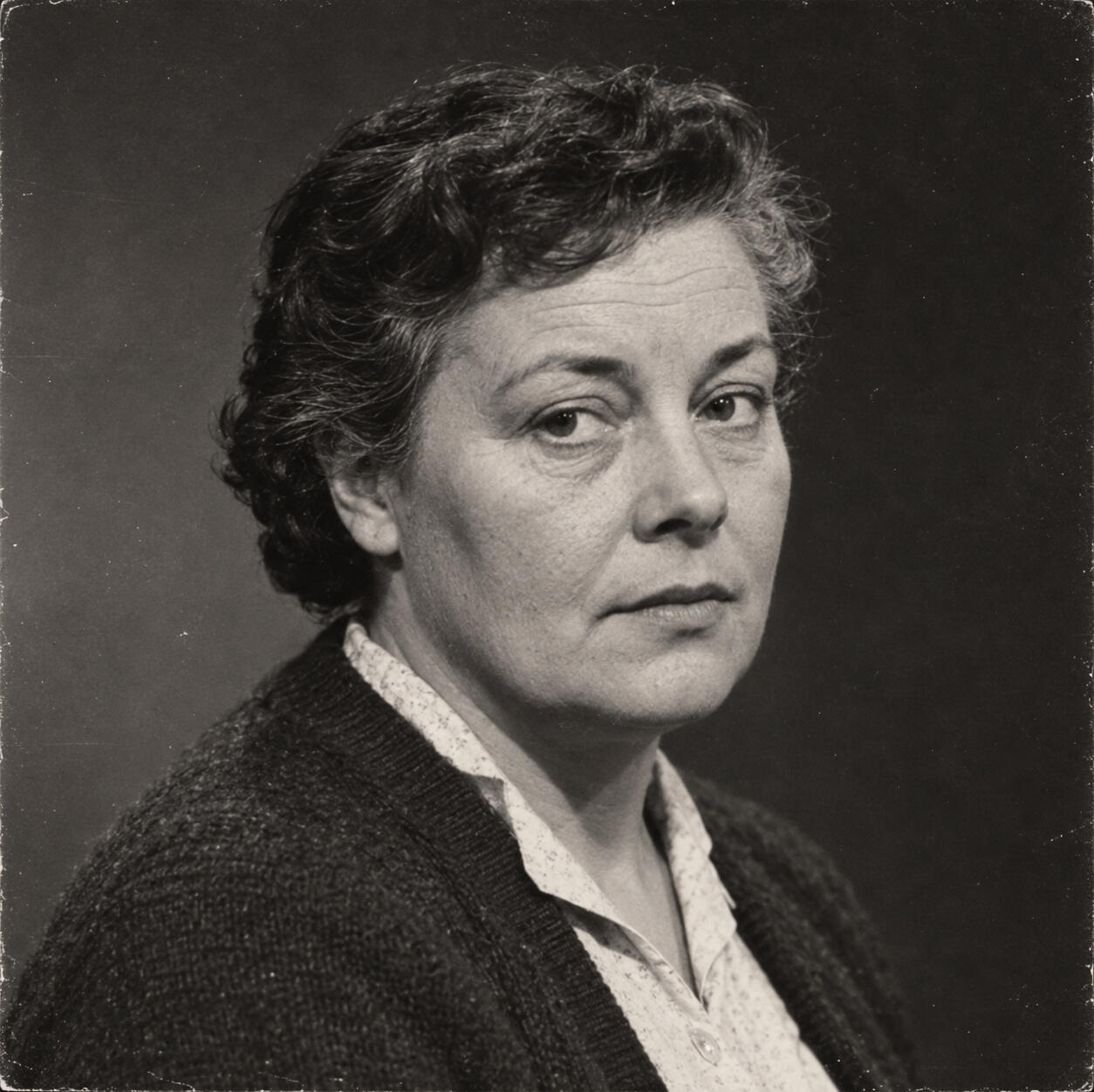
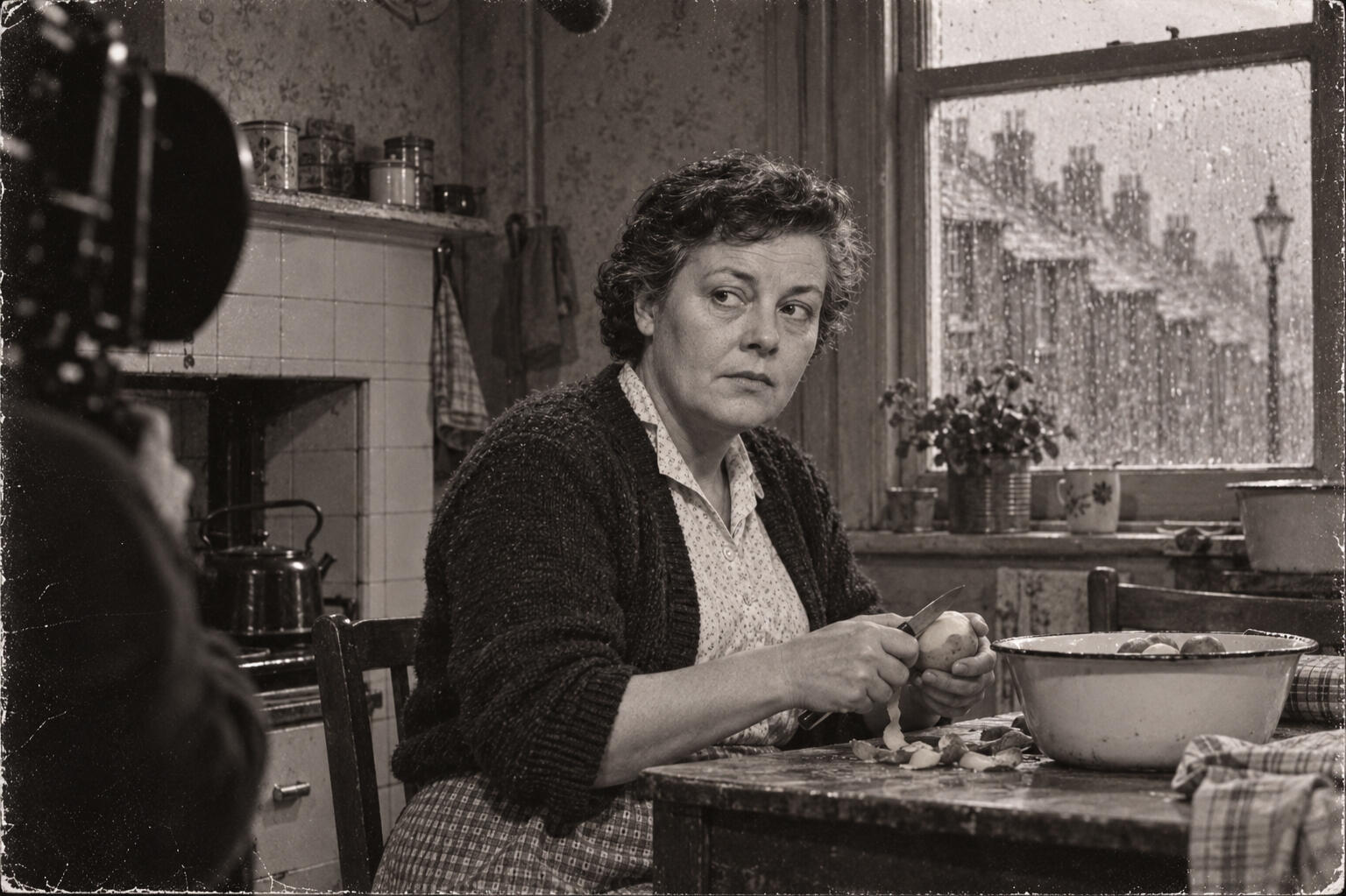
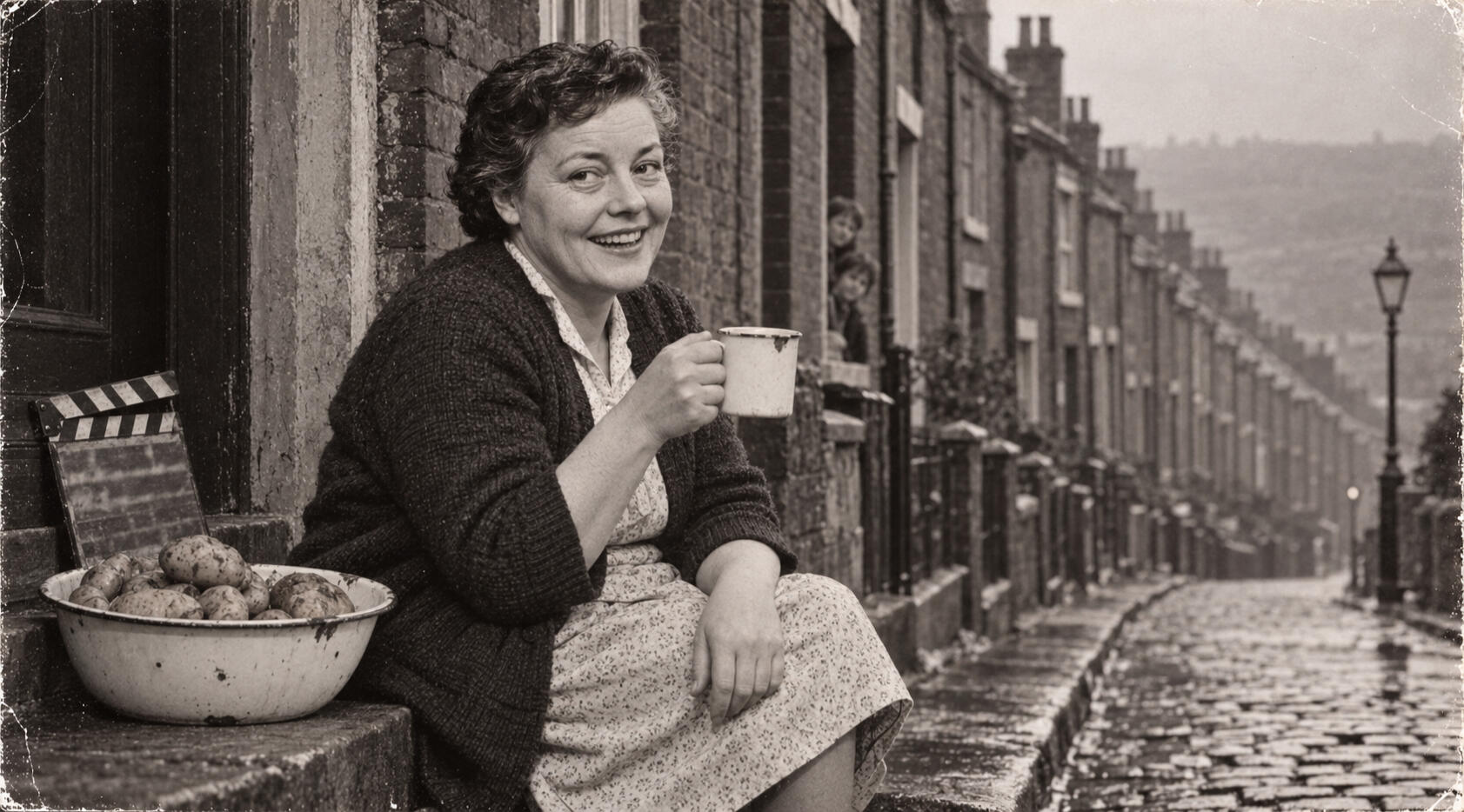
Muriel Braithwaite (1915–1986)Born in St. Helens, Muriel Braithwaite worked in a mill office before joining a local repertory company shortly after the war. Her unsentimental manner and naturally watchful expression led to a succession of roles as landladies, neighbours, widows and women who knew considerably more than they were prepared to say.In The Row, Braithwaite played Edith Nuttall, a housewife living near the middle of the descending terrace. Edith appeared only intermittently, usually cleaning her doorstep or watching the street through her front window, but gradually emerged as the person through whom the separate households became connected. She knew about the debts, arguments and disappearances taking place behind almost every door, although she rarely intervened.Braithwaite was 46 when the film was made. Reviewers praised the restraint of her performance, particularly a lengthy scene in which Edith listened to an argument through the adjoining wall while continuing to peel potatoes. One critic described her as “the still centre of a street quietly coming apart”.She continued working in regional theatre and television throughout the 1960s and 1970s, becoming particularly associated with formidable mothers and suspicious neighbours. She disliked London and routinely refused work that required her to remain there for more than three nights.Braithwaite was an enthusiastic bingo player and claimed to have won numerous large prizes. These included a holiday to the Serengeti, where she contracted malaria and was hospitalised for seven months.She retired from acting in 1980 and became treasurer of a local pigeon club, despite admitting that she did not particularly care for birds in general. She died in 1986, aged 71, after suffering a heart attack during a committee meeting.
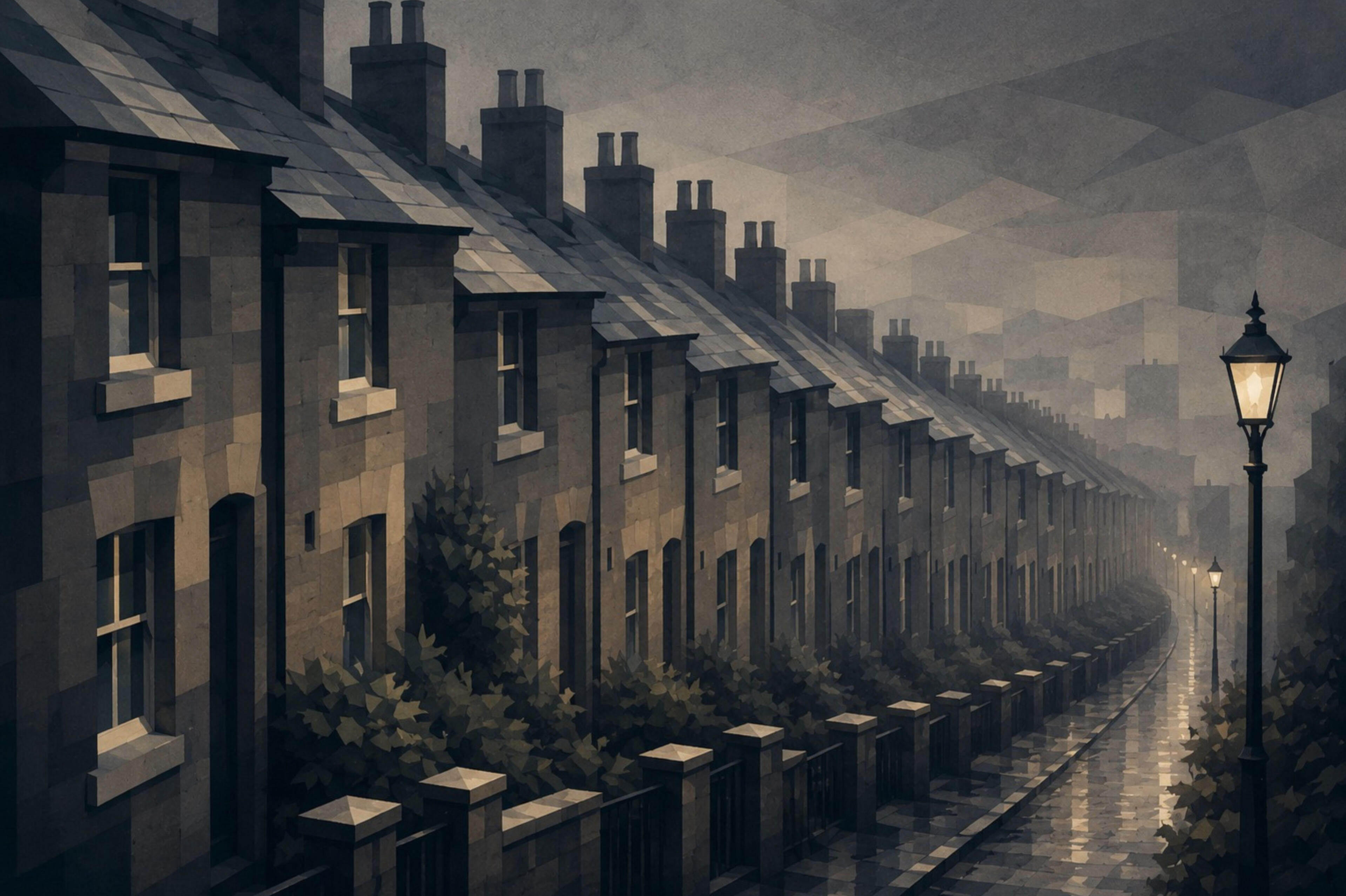
The Row transforms a descending northern terrace into a study of repetition, perspective and enclosure.Chimneys, windows, roofs and garden walls follow the hill in an almost unbroken sequence, drawing the eye towards a town gradually disappearing into the mist.Rendered in the distinctive Northern Deco style, the familiar brick houses become solid geometric forms built from layered planes of slate, charcoal and muted stone.The single illuminated streetlamp introduces a small note of warmth, while the wet pavement carries its light down the otherwise deserted street.Available exclusively through FCSF, this artistic interpretation is available unframed on 240 gsm art paper and measures 20 x 16 inches.
What did the critics think?
Contemporary critics frequently remarked upon the unusual dominance of environment over plot. Long tracking shots along the terrace were repeatedly interrupted by curtains twitching, distant wireless music and neighbours silently observing one another through upstairs windows. One reviewer described the production as:“Less a story than a slow accumulation of unease.”Though marketed by distributors as a psychological drama, audiences reportedly found the film markedly quieter and more restrained than expected. Much of its tension relied not on confrontation, but on implication and proximity. Characters appeared unable to escape either the physical closeness of the street or the persistent awareness of being watched by those living around them.Critical response proved cautiously favourable.The Sheffield Morning Telegraph praised the production’s atmosphere:“A remarkably composed portrait of lives lived too near one another.”While the Sunday Graphic appeared less enthusiastic:“An exceptionally damp study of neighbours avoiding direct conversation.”
From the archive
Filming was delayed when the council collected several dustbins that had been positioned carefully along the street for continuity.
Publicity shot from the archive
The artwork of Reg Baines
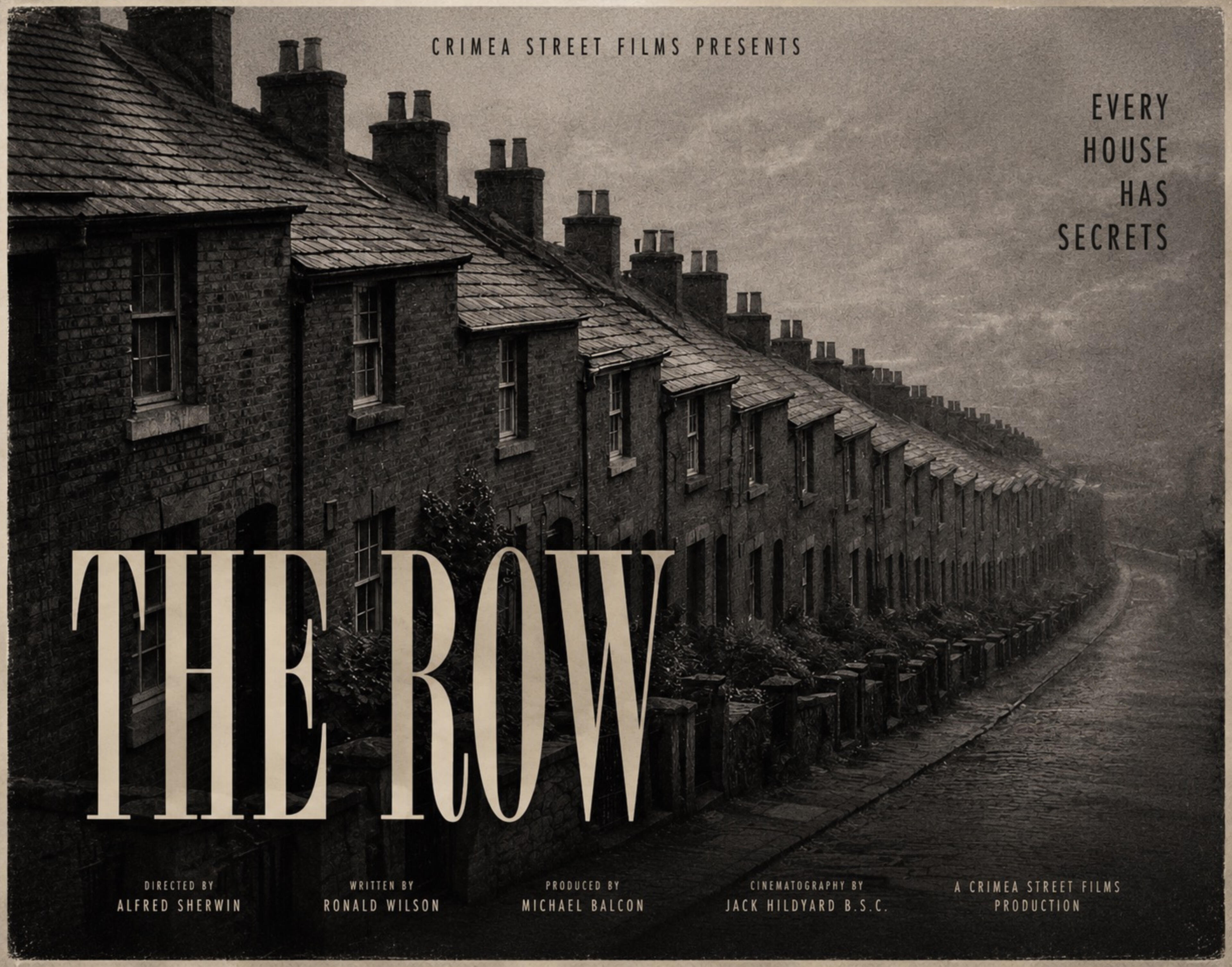
He has faithfully reproduced each poster to a standard that our Reg would have been proud of and each one is available unframed on 240 gsm art paper as a 16 x 20 inch homage to the films we celebrate.
The original posters created by Reg Baines are synonymous with the studio and are very much part of its history.They would have been seen throughout the North of England outside cinemas, on hoardings and in places such as train stations.Most of them were damaged in a fire at the studio in late 1966, but we are delighted to now work with Parbold based artist, Brian Astley.